


Institutional, economic, and social contexts influence the formulation and implementation of climate policy instruments. Three categories of contextual factors that are especially relevant to climate change mitigation in EU policymaking: institutions and governance, innovation and investment and attitudes, behaviour, and lifestyle. Different factors or conditions may facilitate or hinder effective policy implementation as so much depends on the institutional, economic, and social contexts. In addition, not only international pressures but also local barriers.
Policy
59 articles
Sort by

The Paris Agreement requires the world to keep climate change below 2°C above pre-industrial levels, with an aim to stay below 1.5°C. The 1.5° target is particularly demanding and would require both major and rapid change in energy demand and consumption. A key element is to analyze Green House Gas Emissions of consumer-based options in the EU, such as food, buildings and transportation. The Carbon-Cap project explores the effects of applying different policy options.

Europe has taken a leading position in relation to reducing greenhouse gas (GHG) emissions by adopting ambitious policies for the development and diffusion of renewable energy technologies. However, research and development (R&D) in new technologies is increasingly taking place on a global scale. This increasingly also involves the relocation of R&D and value-adding innovative activities to emerging economies, such as China, India and Brazil, by multinational companies (MNCs) from Europe.

Research often focuses on creating and modelling hypothetical scenarios. However, public knowledge and opinions are crucial for the successful uptake of research findings. In this article, we explore how quantitative tools are used for producing scenarios, whereas qualitative tools are used to identify stakeholder preferences.

Interactions between EU climate and energy policies have been analysed based on France, Austria, Greece, and EU-level for policy interaction examples. The analysis resulted in 6 main findings.
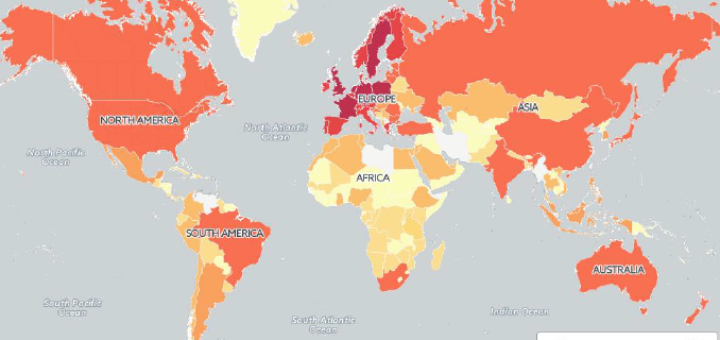
It is unclear whether the large variety on data sources and information on policies mitigating climate change matches the expectations and needs of stakeholders. It is concluded that the data and information available suffers from numerous shortcomings.

‘20-20-20’ EU energy and climate package targets for 2020 contain three climate and energy goals: 20% reduction of greenhouse gas emissions, a 20% increase in share of renewable energy, and 20% increase in energy efficiency. The impact assessment for the 2020 package was duly conducted with the assumption of coexisting energy and climate policies in place. It is increasingly recognised that there are possible detrimental effects of ‘overlapping policies’ that target the same sector.
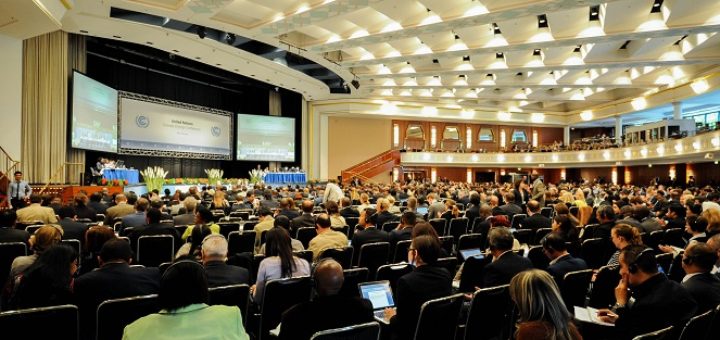
Policymakers and stakeholders need a manageable tool to reduce the complexity of different design options. The EU-funded POLIMP project has provided a practical criteria matrix to assist policy makers and relevant decision-makers in evaluating and comparing different proposals for the 2015 Agreement. Several important results of the analysis of Parties’ submissions are given.
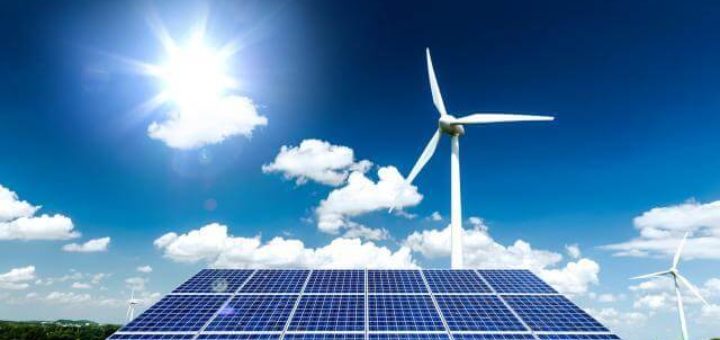
Renewable energy implementation has advantages but requires the harmonisation of the EU support scheme for renewable energy support policies that may eventually improve policy performance. In addition, cost-effective renewable energy policies require the involvement of all participating actors in the decision processes regarding modifications of support schemes.