
A high-level summary of ESM2025 key research outputs and their policy relevance.
Public / policy - International
80 articles
Sort by
A detailed summary of ESM2025 key research outputs and why they matter.
Drawing on work from six Horizon Europe projects (ESM2025, ClimTip, TipESM, OptimESM, nextGEMS and RESCUE) and a third policy forum held in September 2025, this Earth System Insights briefing summarises the latest evidence on how human emissions are changing the climate and what this means for mitigation and risk management.
This briefing explores the questions raised during the second ESM2025 policy forum.
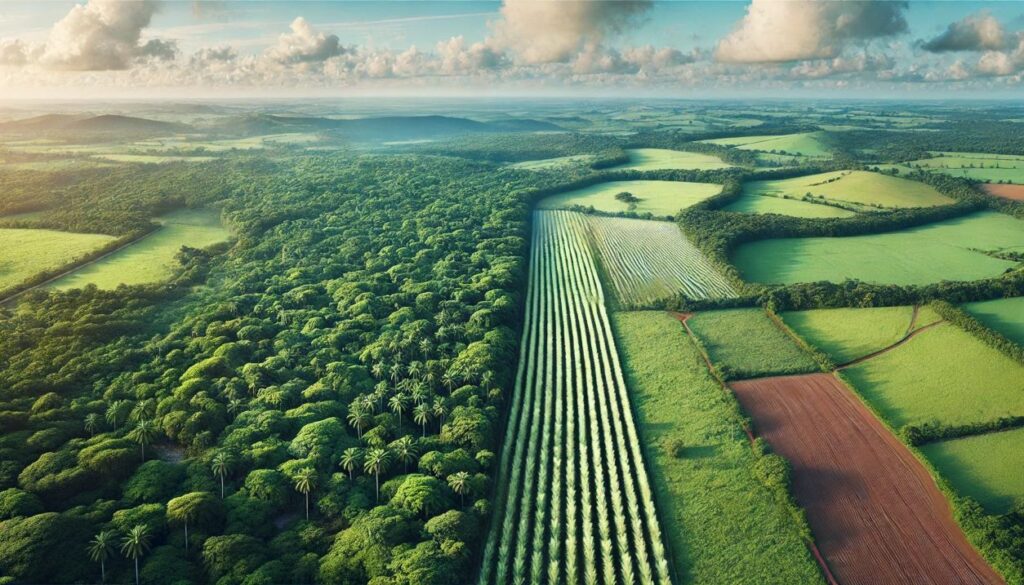
How Earth System Models assess land-based carbon removal (AR, BECCS): carbon-cycle responses, and local climate side-effects; and how Integrated Assessment Models then asses socio-economic constraints that shape decision-ready deployment.
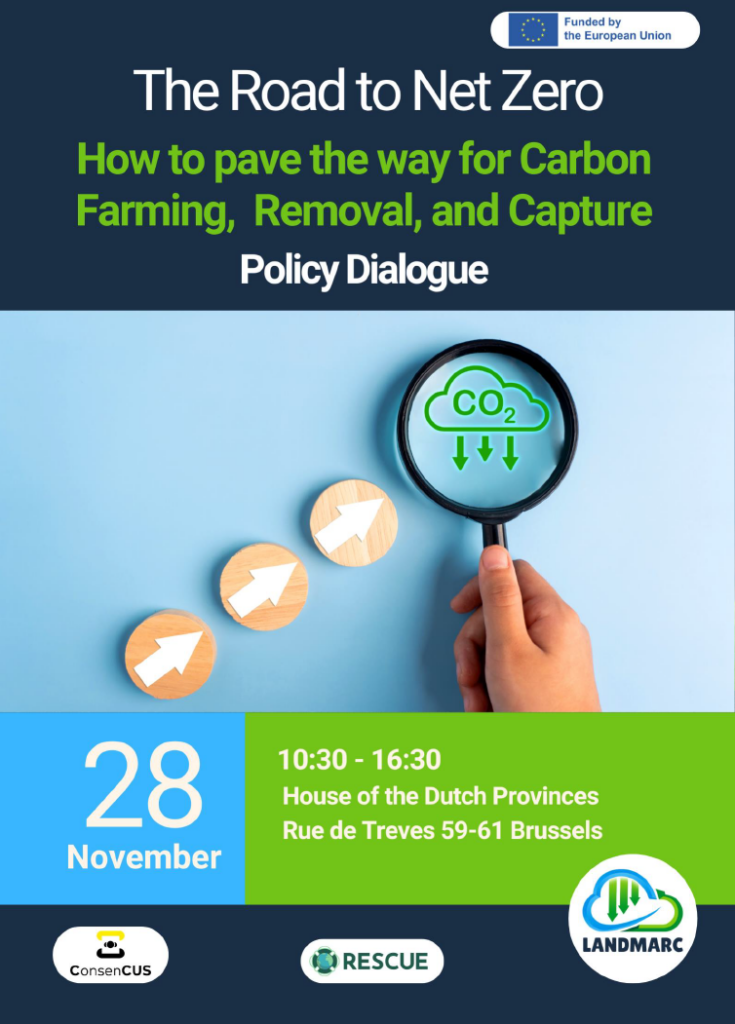
LANDMARC’s final policy event is taking place in Brussels on 28 November 2024. The event will focus on the policy implications of Carbon Farming (CF), Carbon Capture and Storage/Utilization (CCS/CCU) and Carbon Dioxide Removal (CDR) technologies.

This article gives an overview of the links between Earth System Models and Integrated Assessment Models (including the role of Simple Climate Models) that shape one of the main frameworks used for producing the data that feed IPCC assessments.
The study focuses on the planning phase of nature-based solutions in cities, in which trade-offs have to be made between different options, such as the design, effectiveness, financial contributions from residents or participatory options. Based on the UPSURGE survey and choice experiment, the aim is to assist public participation processes in various countries, help planning teams define priorities and design governance measures which ensure long-term dedication to development plans.
Privatized fishery management schemes, alongside other cultural and social changes, have led to a high average age in some fisheries, where youth and newcomers are not meaningfully present in the industry. This research explored the current and future opportunities and constraints for youth and newcomers in Icelandic fisheries, which are managed by an Individual Transferable Quota system. Data were collected through participant observation and 25 semi-structured interviews with key individuals in fisheries.
Atlantic salmon fishing in northern Fennoscandia is part of controversial ecological, sociocultural, legal, and political questions. This paper presents a study of landscape justice as perceived by stakeholders who practice, manage, and govern traditional, household, and recreational salmon fishing on northern Finland’s border rivers, Tornio (Torne) and Teno (Tana).